
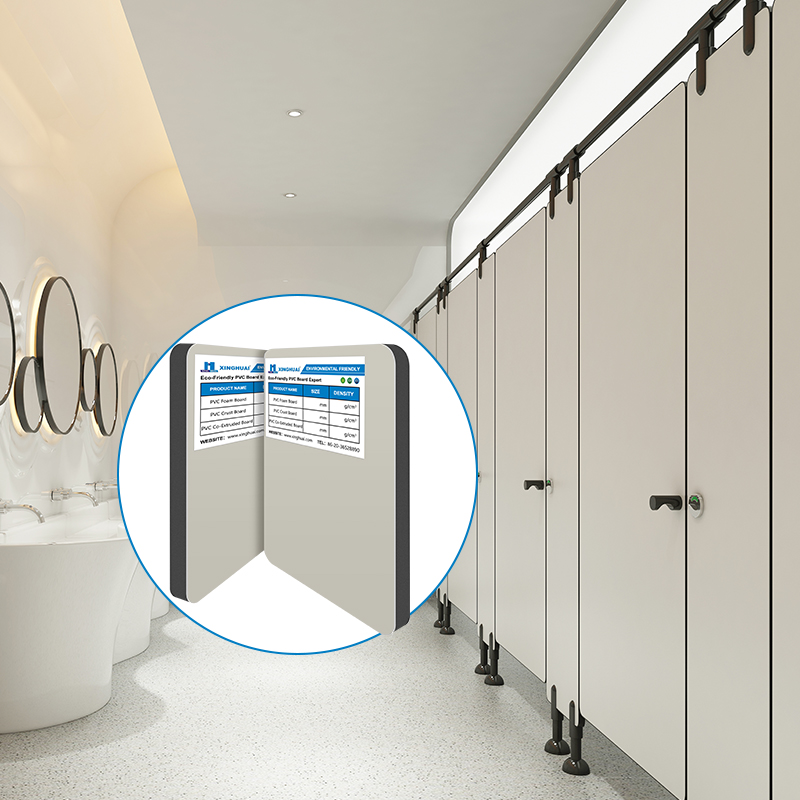
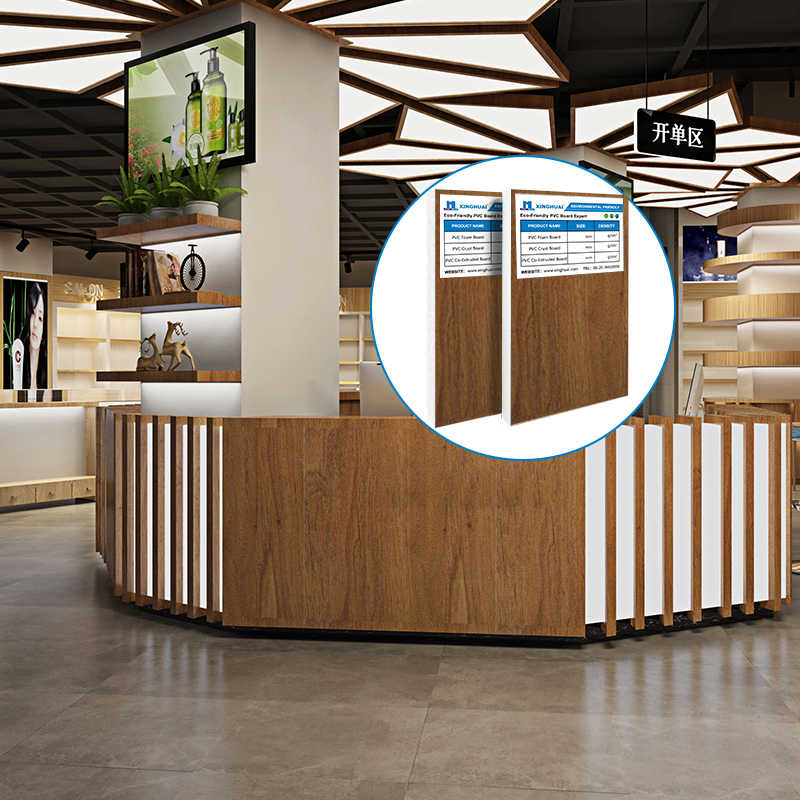
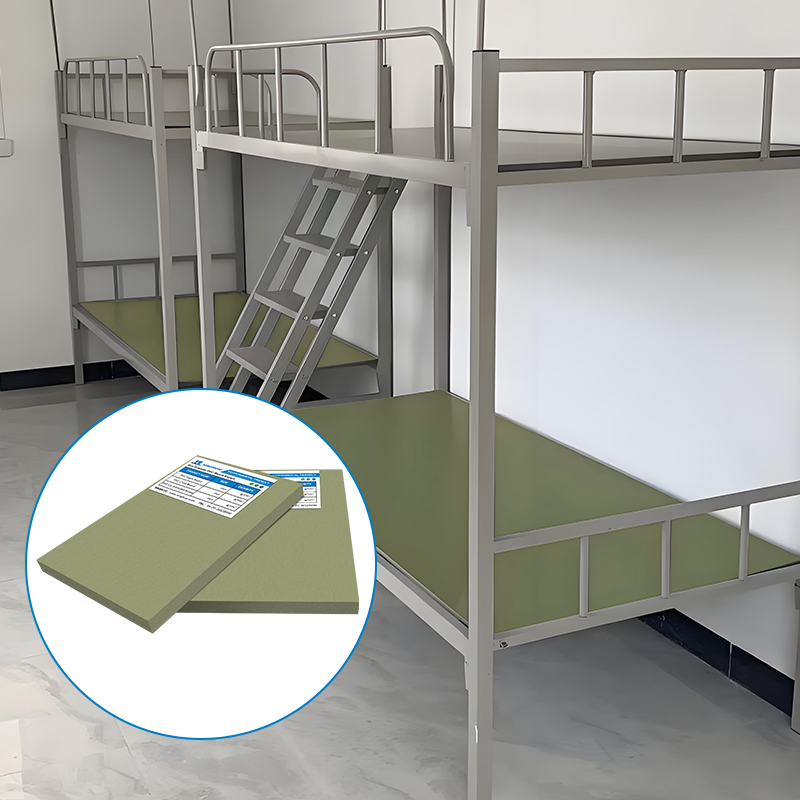
إن اختيار مادة السطح يعتمد بشكل أساسي على حسابات اقتصادية، مثل ألواح الجدران المصنوعة من مادة PVC التجارية.
تتميز عملية البثق المشترك لمادة PVC الملونة بأقل تكلفة، مع استثمار محدود في المعدات الإضافية وتكاليف المواد الخام، ولكنها تعاني من ضعف المتانة الخارجية - ألواح الجدران التجارية المصنوعة من PVC مناسبة للديكور الداخلي أو العروض قصيرة الأجل.
تتميز عملية البثق المشترك ASA بتكلفة معتدلة، وألواح الجدران التجارية المصنوعة من مادة PVC أرخص من PMMA، مع مقاومة متوازنة للطقس ومقاومة للصدمات - الخيار الأفضل من حيث القيمة للأرضيات الخارجية والشرفات والساحات وما شابه ذلك.
تُعدّ عملية البثق المشترك لـ PMMA الأعلى تكلفة. فسعر المواد الخام أعلى بعدة مرات من سعر PVC العادي، كما أن معدل تدفق PMMA المنصهر أسرع بثلاث مرات تقريبًا من PVC، مما يتطلب قوالب خاصة ذات معدلات تدفق قابلة للتعديل، بالإضافة إلى متطلبات أعلى على برغي البثق وجهاز التحجيم. ولكن في المقابل، تحصل على مقاومة فائقة للعوامل الجوية وصلابة سطحية عالية، مما يجعلها مناسبة للمشاريع التجارية الراقية والبيئات التي تتطلب أعلى معايير الجودة.
تجدر الإشارة إلى أنه على الرغم من ارتفاع سعر الوحدة لألواح الجدران البلاستيكية التجارية المصنوعة من مواد الطبقات المشتركة، إلا أن سماكة هذه الطبقة (من 0.2 إلى 0.5 مليمتر) تجعل نسبتها من إجمالي تكلفة المواد محدودة. أما ما يزيد من فجوة التكلفة الإجمالية فهو استهلاك المعدات وتكاليف التحكم في عملية تصنيع ألواح الجدران البلاستيكية التجارية. عمومًا، تكلف ألواح PVC الملونة المصنعة بتقنية البثق المشترك عادةً ما بين 15% و30% أكثر من ألواح PVC العادية، ولكن عمرها الافتراضي أطول بكثير، مما يجعل تكلفة استخدام الوحدة خلال دورة حياتها الكاملة أقل في الواقع.
Co-extruding a high-performance surface material is like putting a "sunscreen" on the board.
Currently, there are three mainstream co-extruded surface materials, each with its own strengths in weather resistance:
PMMA (Acrylic) has no unsaturated double bonds in its chemical structure. The bond energy of its carbonyl carbon-oxygen double bond is as high as 750 kilojoules per mole, making it extremely difficult for ultraviolet light to break its molecular chain. According to QUV accelerated aging test data, a PMMA co-extruded layer shows a color difference ΔE of less than 4.0 after 3,000 hours of irradiation — the color barely moves at all. In tests conducted by relevant material suppliers, merely co-extruding a 0.2-millimeter-thick transparent PMMA layer onto the PVC surface can dramatically slow down the discoloration of the PVC substrate. Among the three mainstream materials, PMMA has the best weather resistance.
ASA (Acrylonitrile-Styrene-Acrylate Copolymer) also contains no unsaturated double bonds in its molecule, with the acrylate component being the core contributor to its weather resistance. ASA's weather resistance is slightly inferior to PMMA, but its impact resistance is superior — its graft-copolymerized polyalkyl acrylate rubber content is far higher than that of PMMA, giving it better flexibility in low-temperature environments. In QUV tests, ASA co-extruded boards can also achieve a color difference ΔE of less than 4.0, with an actual outdoor service life of 15 to 25 years.
PVC Color Masterbatch Co-extrusion means extruding another PVC skin layer containing pigment onto the PVC surface, with a thickness of about 0.5 millimeters. This approach has the lowest cost, but also the weakest weather resistance. Since the surface is still PVC, ultraviolet light can still penetrate the pigment layer and attack the substrate, making color shift and fading inevitable after long-term outdoor use.
In one sentence: The weather resistance grade of the surface material directly determines whether the co-extruded board stays "brand new for ten years" or "changes its face in two years."
2. Mechanical Properties: The Game Between Hardness and Toughness
The surface material doesn't just manage "appearance" — it also manages "strength."
In terms of surface hardness, PMMA has a Rockwell hardness of 85 to 105 HRC, ASA is 80 to 90 HRC, while ordinary PVC is only about 60D (Shore hardness). This means the surface of a PMMA co-extruded board is more scratch-resistant — a fingernail scratch test leaves no obvious marks, and boards with a thickness of 8 millimeters or more can even achieve a scratch-free result. In high-traffic scenarios such as park walkways and scenic area boardwalks, this hardness advantage is the dividing line between "wear-resistant" and "easily damaged."
In terms of impact resistance, ASA actually has the upper hand. ASA is grafted with a large amount of polyalkyl acrylate rubber, and its glass transition temperature is extremely low, maintaining good toughness even at low temperatures. In low-temperature falling dart impact tests, high-quality co-extruded boards are allowed no more than 1 break point, with a dent diameter not exceeding 12 millimeters. Although foam-process plastic wood boards can achieve a notched impact strength of 3.5 kilojoules per square meter, their foam structure reduces overall impact resistance. Once the surface is worn and the internal foam layer is exposed, aging accelerates.
In terms of dimensional stability, second-generation co-extruded plastic wood boards control dimensional change within 0.3% in repeated high- and low-temperature tests, with a linear thermal expansion coefficient not exceeding 5.0 × 10⁻⁵ per degree Celsius. The foam structure of foam boards may increase the thermal expansion coefficient, making them more prone to softening and deformation in high-temperature environments. In regions with dramatic temperature differences, that 0.3% gap is the distance between "no deformation" and "warping and cracking."
3. Fire Rating: The "Coordinated Defense" Between Surface Material and Core Layer
PVC material contains chlorine and naturally has a commercial pvc wall panels certain degree of flame retardancy — it does commercial pvc wall panels not easily sustain combustion once the fire source is removed. But relying on PVC alone, the fire rating usually only reaches B2 level (combustible grade), which still falls short of the B1 level (flame-retardant grade) mandatorily required in public places.
The advent of co-extrusion technology has enabled a qualitative leap in fire performance.
When the surface material uses a flame-retardant formulation (such as ASA with flame-retardant additives or specially formulated PMMA), commercial pvc wall panels combined with the self-extinguishing property of the PVC core layer, commercial pvc wall panels the fire growth rate index of the entire board commercial pvc wall panels can be controlled below 120 watts per second, commercial pvc wall panels the smoke production rate below 0.25 square meters per second, and both the smoke density grade and smoke production toxicity meet B1 level requirements.
According to the national standard GB 8624-2012 "Classification for Burning Behavior of Building Materials and Products," qualified PVC solid co-extruded boards must simultaneously meet: controlled flame spread speed,达标 burning time, commercial pvc wall panels qualified smoke density grade, and toxic gas emissions below the limit. This is not a task the PVC core layer can accomplish commercial pvc wall panels alone — the addition of flame-retardant materials in the surface layer is the key assistance for clearing the B1 level hurdle.
4. Appearance and Texture: The Leap from "Decent" to "Stunning"
The surface material also directly determin commercial pvc wall panels es the "appearance ceiling" of the board.
PMMA has the highest surface gloss, with vivid and saturated colors. The boards it produces are as bright as a mirror, making it suitable for high-end displays, commercial spaces, and other venues with extremely high aesthetic requirements. ASA has slightly lower gloss, but better color stability, with a texture that leans more toward matte — suitable for outdoor flooring, balconies, and similar scenarios. The surface of PVC color masterbatch co- commercial pvc wall panels extrusion is also smooth, but after long-term use, it is prone to uneven gloss and color differences.
In addition, the compatibility between the co-extruded layer and the PVC substrate is crucial. The solubility parameter of PMMA is 9.3 to 9.5, ASA is 9.5 to 9.7, and PVC is 9.4 to 9.6 — the three are extremely close, allowing molecular chains to entangle with each other, creating a blurred interface that will not peel or delaminate during normal use.commercial pvc wall panels This is the chemical foundation that enables co-extrusion technology to run stably over the long term.
5. The Cost Balance: The Eternal Tug-of-War Between Performance and Price
The choice of surface material is essentially commercial pvc wall panels an economic calculation.
PVC color masterbatch co-extrusion has the lowest cost, with limited additional equipment investment and raw material costs, but poor outdoor durability — commercial pvc wall panels suitable for indoor decoration or short-term displays.
ASA co-extrusion has a moderate cost, commercial pvc wall panels cheaper than PMMA, with balanced weather resistance and impact resistance — the best value choice for outdoor flooring, balconies, courtyards, and similar scenarios.
PMMA co-extrusion has the highest cost. The raw material price is several times higher than ordinary PVC, and the melt flow rate of PMMA is about 3 times faster than PVC, requiring special dies with adjustable flow rates and higher demands on the extruder screw and sizing device. But what you get in return is top-tier weather resistance and the highest surface hardness — suitable for high-end commercial projects and scenarios with the most exacting quality requirements.
It is worth noting that although the unit commercial pvc wall panels price of co-extruded layer materials is high, since the layer is extremely thin (0.2 to 0.5 millimeters), its share of the total material cost is actually limited. What truly widens the total cost gap is equipment depreciation and commercial pvc wall panelsprocess control expenses. Overall, PVC colorful boards made with co-extrusion technology typically cost 15% to 30% more than ordinary PVC boards, but their service life is extended by several times, making the unit usage cost over the full life cycle actually lower
